

Canterbury House
A heat-recovery and electrification roadmap designed to reduce fossil-fuel use without shifting energy costs to residents.
The challenge
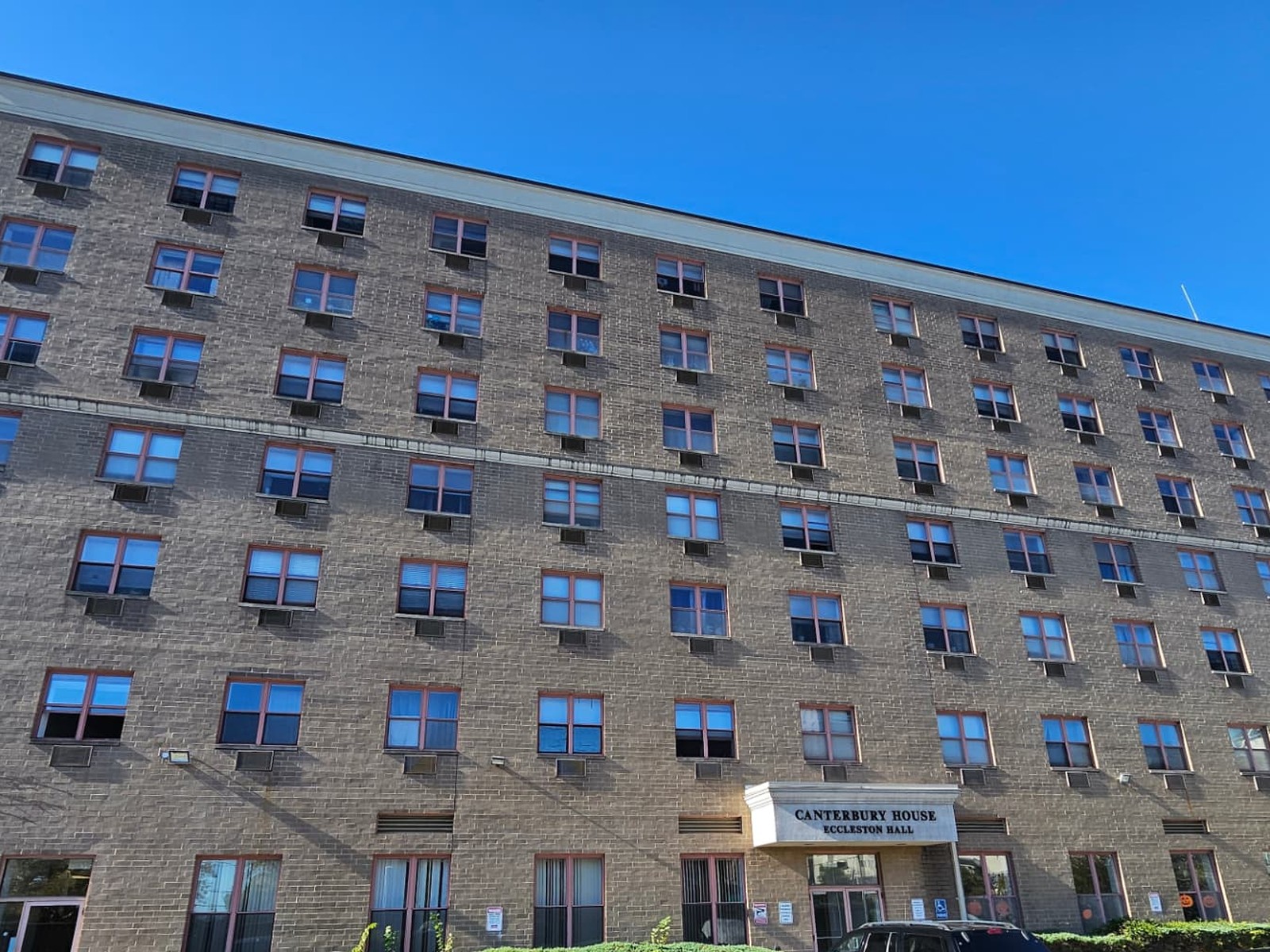
Canterbury House is a six-story, 84-unit affordable senior-housing property on Staten Island. The building relied on central gas-fired heating and individual window air conditioners, giving residents limited control over apartment temperatures. Monitoring found that some apartments regularly overheated, resulting in heat loss through open windows. The building also continuously exhausted conditioned air through approximately 25 to 30 rooftop fans without heat recovery, representing its largest source of recoverable energy. Because residents pay for their own electricity while the landlord covers the central gas system, the electrification strategy also needed to avoid transferring energy costs to tenants.
The system approach
URBS assessed the building’s energy flows and developed a pathway that begins by recovering heat from the ventilation exhaust through a centralized rooftop system. The strategy also shifts ventilation from constant-volume operation to demand-based control, reducing unnecessary airflow while maintaining indoor-air quality. The longer-term pathway combines heat recovery with a ground-source heat-pump system and new hydronic distribution. This would replace the gas-fired boiler and window air conditioners with centralized all-electric heating and cooling, while providing residents with apartment-level temperature control. The study established an integrated pathway for reducing energy waste, improving resident comfort and transitioning the property away from fossil fuels without shifting costs to residents.